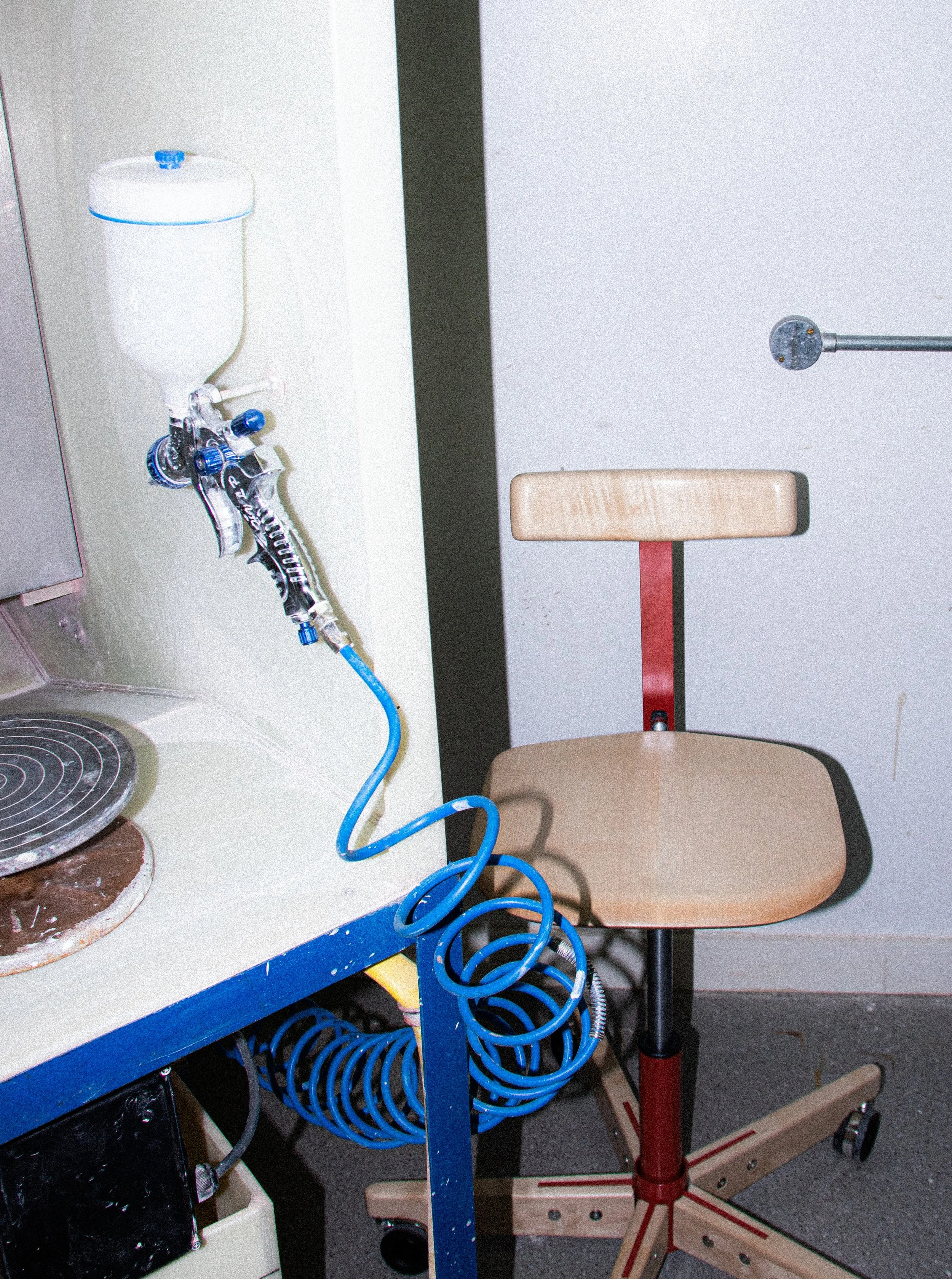
Mechanisms are intuitive and tactile—pulling, winding, turning—offering a more analogue, physical experience in contrast to many overly technical alternatives. Answering as a piece of design “what is the factory chair of today?”
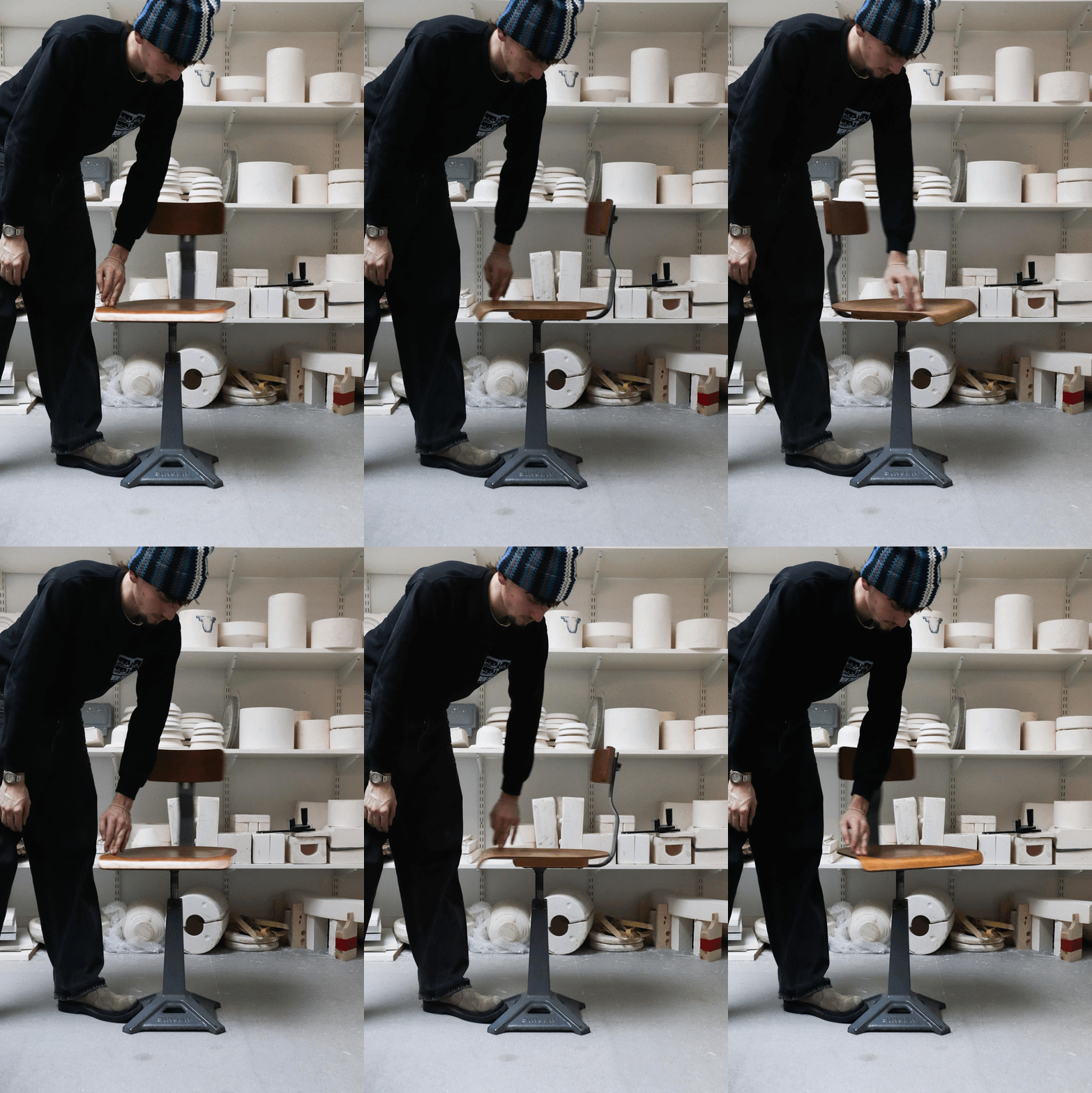
Structurally expressionist in its metal componentry, the piece centres on a threaded backrest adjustment mechanism that takes advantage of the memory of formed steel. This accommodates both upright support and a more relaxed posture, for small areas of comfort in rugged use.
I was inspired by a machinist chair I came across during my time at university, a piece of industrial furniture design that embodied utility and honesty. Its functional beauty lay in its simplicity: adjustable through a simple spin or tightening a nut, built from hard materials, and designed without excess. To me, it represented a forgotten typology, early ergonomic thinking born from necessity rather than trend.
These chairs, often discarded or left behind in old buildings, had a weight and presence, both physically and symbolically. Their heavy cast iron components and no-nonsense forms told stories of labour and longevity, values increasingly absent in today’s throwaway culture. Rather than pursue the complexity of modern task chairs, I wanted to revisit that original intent with a contemporary Lense.